How to Implement a Risk-Based Approach for Customer Segmentation
Last updated: January 27, 2025
Implementing a risk-based approach to segment customers into High, Medium, and Low risk categories is an essential part of effective compliance management. This article outlines key factors to consider when developing your risk segmentation framework.
Key Risk Factors for Individuals (KYC)
Sanctions and Watchlist Check: Verify if the individual appears on international sanctions or watchlists (e.g., OFAC, UN).
Country of Residence: Assess the risk level associated with the individual's country of residence.
Geolocation Mismatch: Flag cases where the user's input country doesn't match their IP-based geolocation.
Key Risk Factors for Businesses (KYB)
Sanctions and Watchlist Check: Verify if the business or its stakeholders appear on international sanctions or watchlists.
High-Risk Jurisdictions: Identify if the business is registered in or operating from high-risk or tax haven countries.
Operational Address Validation: Check for mismatches or unverifiable operational addresses (e.g., PO boxes).
Beneficial Ownership: Assess the clarity and risk level of ultimate beneficial owner (UBO) details.
Adverse Media Presence: Look for negative media coverage linked to fraud, corruption, or illegal activities.
Industry-Specific Risks: Evaluate if the business operates in high-risk industries (e.g., crypto, gambling, arms trade).
Business Age: Flag businesses less than 6 months old in high-risk industries for review.
Website Analysis: Check for the presence of essential details and suspicious content on the business website.
Regulatory Compliance: Verify the presence of required trade licenses, certifications, or mandatory filings.
Formation Date: Pay special attention to businesses less than 2 years old.
Industry Code: Implement risk scoring based on the business's industry code.
Implementing the Risk-Based Approach
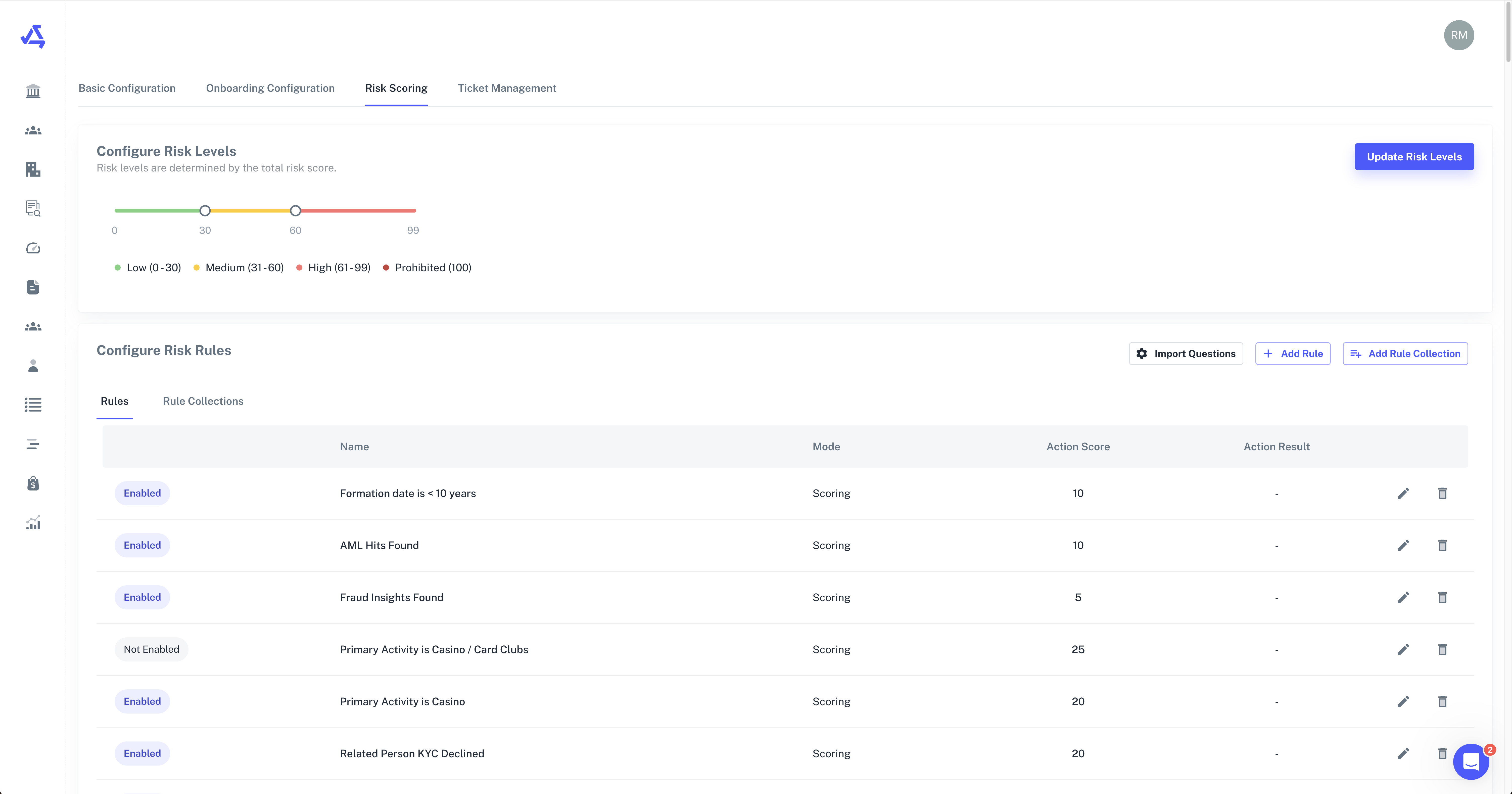
Assign risk scores to each factor based on your risk appetite and regulatory requirements.
Set thresholds for High, Medium, and Low risk categories.
Combine individual risk scores to determine the overall risk level for each customer.
Regularly review and update your risk assessment criteria to ensure they remain relevant and effective.
Remember, this framework serves as a starting point. Customize it to fit your specific business needs and regulatory environment. Regularly consult with legal and compliance experts to ensure your risk-based approach remains compliant with current regulations.